
On Trapping Furbearers
Connection, Conservation, Clothing

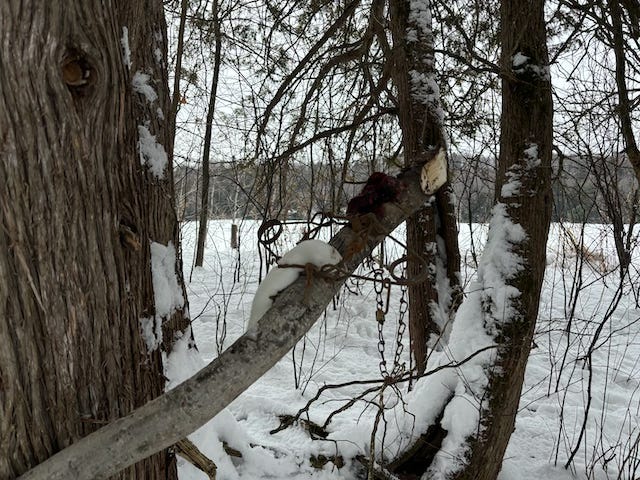
Fur trapping is a dying art.
“Art” because there is a real finesse required to make a catch. One that takes years to hone and changes with season, weather, and set location—a set refers to a trap set, including bait, poles, the trap itself, other attractants and such.
“Dying” because, along with a dead flat fur market, the skills and stories and culture of those folks who used to practice it are going away. Most people under the age of thirty-eight are hard pressed to find someone who wants to learn how to trap. And even if they did, who would teach them?
I myself am under the age of thirty-eight and have wanted to learn the art for many years now, so I know that there is hope. If I’m into it, plenty of others are too. They are simply harder to find anymore. Years ago, every hunter was a trapper, and every farmer was a hunter, and every family had at least one farmer in it. Our culture at large moved away from the land and into urban and suburban environments. Places where interesting wild critters and creatures are rare.
As a result of this movement away the land, there has been a loss of—and even a disdain for—culture that exists close to the land.
This has led to the formation of specialized groups who gain money and influence in order to demonize hunting and trapping—even farming. This while they claim nature as their top concern, but knowing nothing of how these human activities are good for nature. The folks who fall prey to their influence will take to the internet in protest against, say, wild predator management, having themselves never seen a wild predator other than on a screen.
Their influence has prompted some states to ban trapping, while others have restrictions in place that render trapping impossible. Daily, hunting and trapping are at risk in state capitols due to the migration of rural people to cities and their subsequent hatred of what they left behind. Their hatred is not organic, but given them at the door upon entering the metropolis.
The art of trapping is dying for these reasons, but along with it is a dying culture that is localized, filled with stories and knowledge of landscapes that we all live on.
The past two years have finally afforded me the opportunity to take learning about trapping more seriously. But no teachers have appeared, outside the internet. Ever since the world changed forever in 2020, a yearning to let go of the new world and engage with the old has taken over me.
I’ve always worked with my hands, uneducated as I am, to make a living. But in the past few years, my hands have sought a connection with the tangible world that seems to be evermore rare. I touch grass and dirt and running water, and manure, and sawdust, and mud, blood, and bones. I smell flowers, and trees, and shit, and decaying earth and flesh, and the rotten bottom of a stagnant waterway. My fingers go numb with cold, my face gets scratched by thorns, and my back hurts most of the time.
But that’s the way I want it—to be in touch with the world. I like the feel and the smell of it all.
Like any new skill, trapping takes time, frustration, mistakes, and creativity. Steven Rinella once said, “Trapping is a lesson in managing disappointments,” and he is correct.
The frustration comes mostly from not having anyone to ask questions to. But the internet is truly useful in this way. One of the good things about the internet (other than your being able to read this right now) is how useful it is for young people like me to learn old ways of doing. Very twenty-first century.
A lot of young folks who grew up with the internet are simply fatigued by it, and desire to engage with the tangible, but don’t know how to. They want to garden, hunt, trap, plant trees, build things, etc, but are at a loss for mentors. So they turn to the very digital thing they’re tired of.
YouTube, for instance, has been my trade school for many years. I once rebuilt the front end of the engine in an old Ford truck using a YouTube video. When I eventually found my way to fur trapping, it only made sense to watch some videos on it.
I’ve all of but let go of my reliance on the internet for trapping, tending as I do toward getting in reps and learning by trial and error. Pleasantly, I’ve found that trapping has given me a new way of connecting to the outdoors—what I like to call the real world. Connection starts with attention. A trapper has to know the patterns and habits of his targets. By way of learning those creatures, he learns what kind of plants are around, and which creatures like them. He learns what the river does throughout the year, how it changes and how the local critters change with it. He pays attention to the shape of the land and how it’s traversed. If he is curious, he wonders why the land is shaped as it is.
The list goes on.
This connection endears the land to him, and he knows its breathing and living.
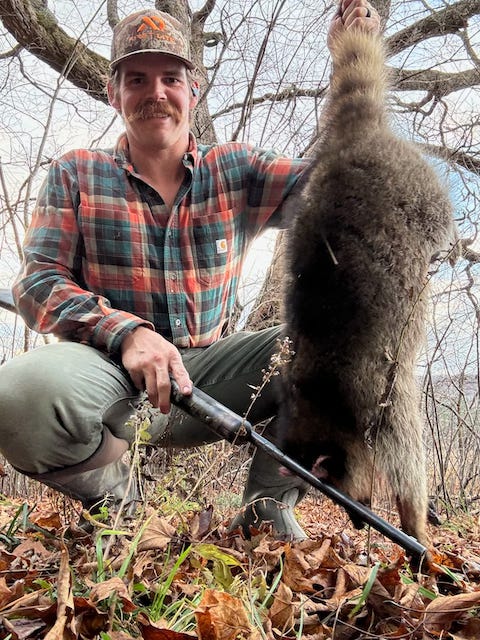
As a result of this paying of attention, a trapper knows his place on the landscape. He therefore knows his abilities and inabilities. He finds humor in some of the habits of his targets, and loves them for their toughness, their wits, and their lives. Because of this love, he does not want to eradicate them. He wants to keep them. He retrains himself in effort to keep them.
Part of the art of trapping is knowing when to pull traps and move on to another place. There’s a slough on the ranch where I work that is fed by ground water and isn’t but a few feet deep. It grows cattails and other wetland plants native to central Wyoming. It is perfect muskrat habitat. It behoves the trapper that he not trap every single rat out of such a slough, because he wants to keep enough to repopulate year after year. This is called keeping a seed population.
Much like deer, furbearer populations can be managed. However, unlike deer, it is highly unlikely that furbearer populations would have even a dent made in them by trappers. These critters are doing great on our landscapes. The management, therefore, of these critters comes by trying to control small, localized populations. for instance, I can trap most of the rats out of the slough here, but I surely couldn’t effect the population of muskrats on the whole of the river. What my small management does is keep the population here healthy, free of disease, with plenty of habitat.
Keeping furbearers in check allows for small and localized land management efforts. For example, a beaver dam built across an agricultural waterway such as a slough needed for winter water, or an irrigation ditch is not a dam that we can keep. The damage that can occur when these dams are built is likely going to be vast. Equally, the life and beauty that comes from a beaver dam well-placed on a mountain stream is likely going to be vast. But as humans, we have the obligation to manage the land and wildlife that we live with. Part of that is choosing when and where to allow beavers to be busy little beavers. Trapping is the best means of management for these beautiful little engineers.
Other quick examples:
Raccoons raid birds’ nests. Trapping/hunting them allows for more turkeys or pheasants, and lots of untold birds. As well, muskrats can cause stream bed erosion if not controlled. Coyotes and wolves predate on livestock/pets. A fox will clean out a chicken coop in no time. Just to name a few.
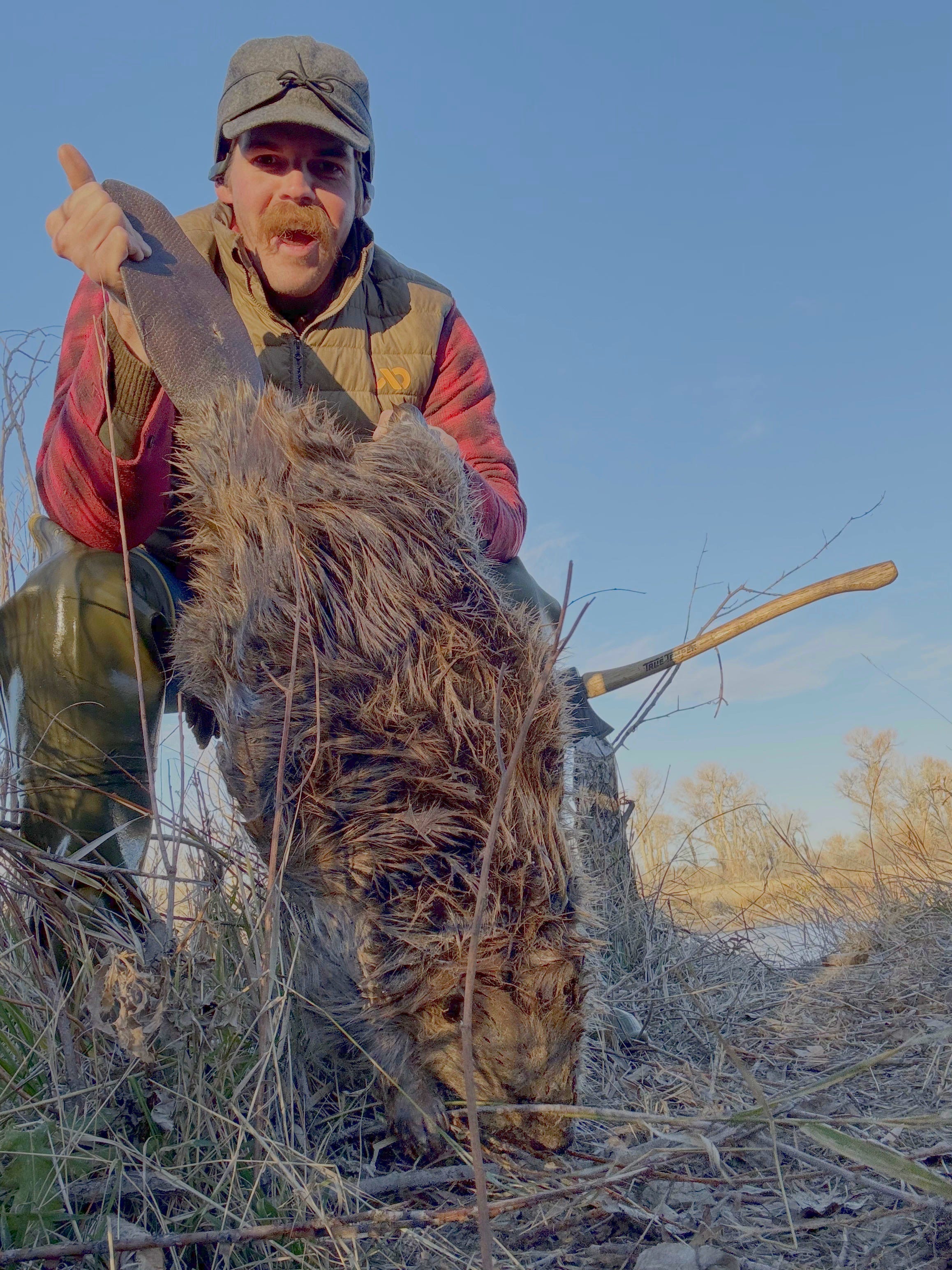
Furbearers are considered a renewable resource, because their populations are so ubiquitous and resilient. This means that fur itself is renewable. In addition, the waste from fur production does not sit in a landfill for thousands of years. The ground takes it back gladly. Compare this to other forms of cold-weather gear, with factory made plastic and synthetic material that will sit in the ground for who knows how long.
There is also no synthetic or plastic hat out there that will keep you as warm as one sewn from beaver fur. Not one as beautiful either.
I wish fur could be popular again. With people trying to be environmentally conscious, it’s a shame that fur has gone out of vogue and has gotten a bad rap. On the whole, wearing fur is way better for the environment than whatever plastics are produced by popular outdoor brands. Fur was labeled cruel, while forever chemicals and plastic clothing was considered cruelty free and environmentally conscious, being worn by outdoorsy people who wanted to be perceived as good and earth-minded. They have no problem spending a fortune on a high-tech coat made with forever chemicals, the production of which produces untold amounts of forever waste—not to mention the use of fossil fuels they’re always complaining about—but call themselves conservationists for not wearing fur.
These folks will buy a big-named item and tell themselves, as they are told by the big name, that their money is being spent in some far-off place doing environmental work, but they forget their local woods and waters, and the work being done in them by their own neighbors, who produce hand-made and sustainable fur products.
Using fur, especially when bought locally, is the non-trapper’s way into supporting local conservation. Imagine one is skiing through the woods and comes across a beaver pond, while wearing a headband made by a local furrier, there is a chance that their warmth has come directly off the land that they’re presently enjoying. The road they’re skiing may have been kept in tact by the limiting of that beaver population and reduction of flood risk.
Local furriers can be found, and they’re likely to be of a curious and eccentric sort. One is apt to find many good stories, also locally produced. It is worth the effort to find such interesting folks and to buy what they’ve spent years perfecting. It is also worth the effort to learn how to make things on your own.
I myself am delving into the art of sewing things out of fur. I find great satisfaction in being able to wear the fur while out working on the landscape that blessed me with it to begin with. Keeping myself warm with the work of my own hands by the abundance of the land is pure freedom to me. And I owe it to the creatures whose fur I took to make the most beautiful and functional use out of it.
Local furriers understand this. Like buying food, buying locally from people whose name you know is preferable to any alternative. It’s how local stories and cultures stay alive, which is how communities know themselves and take care of their members. It’s how we all look out for our neighbors and our lands.
(2025)
Throughly enjoyed this read!